Air Raid Offense: Complete Master Guide for Coaches, Players, and Football Strategists
The Air Raid offense is one of the most influential, innovative, and widely adopted offensive systems in modern football. From high school programs to major college teams and even professional adaptations, its principles have reshaped how teams attack defenses, distribute the ball, and structure offensive philosophy. This comprehensive guide breaks down every element of the Air Raid Offense—its origins, philosophy, play-calling logic, installation methods, receiver rules, quarterback reads, practice structure, and advanced variations—so you can run it confidently and efficiently. Whether you are a coach looking to install it, a player wanting to master it, or a strategist aiming to understand its deeper logic, this guide gives you everything needed in one place.
Origins and Evolution of the Air Raid
The Air Raid offense began as a radical approach built on the idea that spreading the field, simplifying execution, and maximizing space could overwhelm defenses—no matter the talent level. Early pioneers believed passing was not simply a situational weapon but a foundational strategy that could consistently move chains, stress defenses, and create high-efficiency plays. They built the offense around timing, spacing, receiver independence, and quarterback decision-making. Instead of requiring massive offensive lines or powerhouse running backs, the system relied on precision, repetition, and understanding space. Over time, the Air Raid expanded into hundreds of schools, each adding variations, adjustments, and personal touches. The core foundation remains the same: spread formations, high-percentage passing concepts, simplified playbooks, and relentless practice of a few base plays until they become automatic.
Core Philosophy and Strategic Mindset
The Air Raid is more than just a passing system—it is a philosophy centered on simplicity, repetition, and exploiting defensive space. It uses wide horizontal spreads, disciplined vertical stretches, and quick-developing plays. The offense embraces minimalism. Instead of overwhelming players with a thick playbook, it focuses on mastering a limited number of routes and concepts. This allows players to react faster than defenders. Quarterbacks are trained to read space, not memorize hundreds of looks. Receivers learn route adjustments based on leverage instead of rigid patterns. The offensive line uses wide splits to stretch the pass rush and create natural lanes. Running backs become hybrid weapons, contributing in protection, route combinations, and outside runs. The philosophy is simple: spacing + speed + timing = constant stress on Air Raid Offense. When executed well, defenses are forced into impossible choices, opening scoring opportunities across the field.
Formations and Personnel Structure
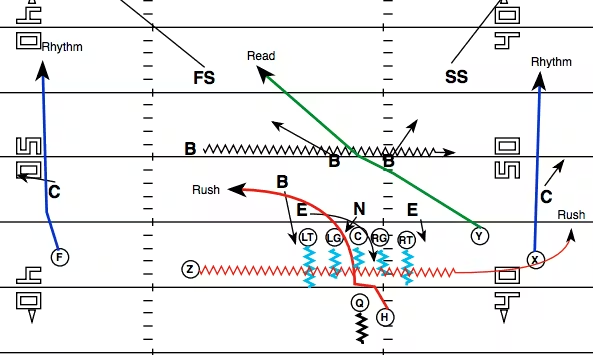
Although the Air Raid can be run from various personnel groups, its signature look uses four wide receivers spread across the field with one running back and a quarterback in shotgun. The spacing forces defenses to declare structure before the snap. Typical receiver alignment includes two outside receivers and two inside receivers who line up wide enough to stretch both the perimeter and the seams. The running back aligns beside the quarterback, creating balance for both passing and running plays. Offensive line splits are intentionally wider than traditional systems to create passing lanes and slow defensive penetration. Tight ends may be used occasionally, but most pure Air Raid Offense systems minimize them to keep the field wide and maximize matchups. Motion is used sparingly, but when used, it reveals defensive coverages and helps receivers gain leverage.
Core Passing Concepts
A signature of the Air Raid is its reliance on a small group of timeless concepts run from multiple formations. Every player understands their role regardless of variation, making the offense easy to learn yet difficult to stop.
Mesh: One of the most famous concepts, Mesh uses crossing routes at shallow depth to create natural picks, open zone pockets, and force defensive communication. It works against every coverage, including man, zone, and hybrid structures.
Shallow Cross: A single shallow route paired with vertical and intermediate options. It stresses linebackers and moves chains with high consistency.
Y-Cross: A cornerstone concept that attacks deep middle space while providing natural checkdowns and weak-side isolation. It is a favorite for quarterbacks because it offers layered targets at every level.
Four Verts: A true vertical stretch that forces defenses to defend the entire field. Receivers adjust based on leverage, making the play dynamic and difficult to predict.
Stick: A quick-game staple that utilizes a simple inside-out read to exploit flat defenders. Effective against both man and zone, it is ideal for moving chains.
Curl-Flat: A timing route that attacks soft spots in common zone defenses.
Screens: Running back screens, tunnel screens, and bubble screens are built into almost every series to slow down blitzes and create easy yards.
These concepts form the backbone of the Air Raid, allowing offenses to remain consistent even as defenses disguise coverages.
Running Game Within the Air Raid
Contrary to misconceptions, the Air Raid Offense includes an effective running game. The difference is philosophical: runs are used strategically, not simply for balance. They punish defenses that overcommit to stopping the pass and exploit light boxes. Common runs include inside zone, draw plays, counter, and quick-hitting sweeps. Since defenses are often spread thin and anticipate passes, the running game frequently becomes more efficient than in traditional systems. The goal is not high volume but high efficiency. When executed correctly, the run game forces defenses to tighten coverage, opening explosive passing opportunities.
Quarterback Development and Read Progressions
The quarterback is the conductor of the Air Raid offense. The system is designed to help quarterbacks make fast, correct decisions using simple reads that operate against all coverages. Quarterbacks are trained to diagnose leverage, identify pre-snap tells, and process rotations after the snap. Each play includes a progression that prioritizes space, not sequence. Instead of rigid instructions like “Read 1 → Read 2 → Read 3,” Air Raid Offense quarterbacks are taught to read grass—throw where the defenders aren’t. Footwork, timing, and calm decision-making are emphasized. Quarterbacks must learn to trust the system, trust their receivers, and deliver accurate throws on rhythm. They are encouraged to distribute the ball without favoritism, forcing defenses to defend all areas. With enough repetition, quarterbacks develop mastery over defensive tendencies and anticipate openings before they occur.
Receiver Responsibilities and Adjustments
Receivers in the Air Raid are not robots running programmed routes. They are decision-makers who react to defensive leverage. Every route includes multiple adjustment rules. If a defender plays inside leverage, break outside. If the defender sits in zone, settle in an open window. If coverage drops deep, throttle down and present a target. Receivers maintain spacing to avoid crowding zones and disrupting timing. Their discipline ensures plays remain structurally sound even when coverages shift unexpectedly. Receivers must be conditioned to run high volumes of routes with consistent speed. Practice repetitions and recognition are vital for creating the chemistry that makes the Air Raid unstoppable.
Offensive Line Strategy and Protection Philosophy
Pass protection in the Air Raid is designed to minimize confusion and maximize efficiency. Wide splits create natural gaps defenders must cross, buying quarterbacks more time. Protection schemes are simplified so linemen can react quickly. Many Air Raid programs use half-slide or full-slide protections, allowing linemen to help one another and communicate efficiently. Running backs assist either as blockers or quick-release receivers, depending on defensive structure. Because the offense spreads the field, blitzers must come from distance, giving linemen and quarterbacks time to adjust. The simplicity ensures even less experienced lines can execute consistently.
Practice Structure and Repetition System
Air Raid practices are intentionally repetitive. The philosophy is that mastery comes from constant repetition, not constant change. Practices include rhythm periods, Air Raid Offense drill circuits, quick-game timing sessions, and pass skelly segments. Every day reinforces the same plays until execution becomes instinctive. Players rehearse situations repeatedly: red zone, third down, two-minute drill, backed-up scenarios. Instead of installing dozens of new formations, teams emphasize precision in the core system, ensuring players are never confused. The consistency builds confidence and eliminates hesitation.
Installation Blueprint for New Teams
For teams installing the Air Raid, the process is gradual and structured. Week 1 emphasizes basic formations, snap counts, quick game concepts, and simple screens. Week 2 expands into core plays such as Mesh, Shallow, Y-Cross, and Four Verts. Week 3 introduces advanced protections, motion tags, and run-game complements. Week 4 refines tempo, audibles, and sight adjustments. As the season progresses, coaches add wrinkles based on defensive tendencies rather than overhauling the system. The beauty of the Air Raid Offense is that even young or rebuilding programs can adopt it without needing elite athletes. What matters most is discipline, understanding, and repetition.
Tempo and Game Management
Tempo is a powerful weapon within the Air Raid Offense. Teams can choose slow, methodical pacing or unleash rapid-fire plays to pressure defenses. Fast tempo prevents defenses from substituting, disguising coverages, or catching their breath. Slow tempo allows offenses to control the clock and dictate the rhythm of the game. Many Air Raid Offense programs mix tempos strategically, keeping defenses uncomfortable. Play-calling is designed to maintain rhythm, avoid negative plays, and consistently move chains. Third-down conversion strategies, two-minute drills, and red-zone adjustments are rehearsed until they feel automatic.
Attacking Different Defensive Coverages
The Air Raid Offense succeeds because its concepts work against all defensive structures. Against man coverage, crossing routes, pick plays, and vertical stems create natural separation. Against zone coverage, spacing rules, adjusted routes, and layered concepts exploit soft spots. Against hybrid defenses that disguise intentions, the quarterback reads leverage and delivers high-percentage throws. The offense forces defenses to cover the entire field, making it difficult to hide weaknesses. Even advanced defensive systems struggle because the Air Raid eliminates complexity for the offense while increasing stress for the defense.
Advanced Variations and Modern Adaptations
Over the years, coaches have added personal touches to the Air Raid. Some integrate heavy run-game schemes, RPO elements, motion packages, or pistol formations. Others combine traditional Air Raid passing concepts with power-run looks. Modern versions incorporate option reads, tempo shifts, multi-back formations, and expanded screen packages. While variations differ, the core philosophy stays consistent: spread the field, simplify execution, and stress defenses using space and timing.
Common Mistakes When Installing the Air Raid
Many teams fail due to misunderstanding the system’s principles. They add too many plays before mastering the core concepts. They allow route depth to become inconsistent, destroying timing. They rotate receivers too often, preventing chemistry. They neglect the running game entirely, making the offense predictable. They fail to enforce fast practice tempo or precise execution. They underestimate how essential repetition is. Successful Air Raid teams commit fully to the philosophy and avoid mixing conflicting offensive systems.
How to Defend the Air Raid
Defending the Air Raid Offense requires discipline, communication, and consistent leverage. Defenses must disrupt timing, reroute receivers, disguise coverages, and pressure the quarterback without overcommitting. Some teams use drop-eight coverages to force long drives. Others bring simulated pressure to confuse protection schemes. The key is preventing quarterbacks from getting into rhythm. However, even great defenses struggle when the offense executes well, because the Air Raid forces defenders to make difficult decisions on every snap.
Building a Successful Air Raid Program
A complete Air Raid program goes beyond plays. It includes strength training focused on conditioning and speed. It builds a culture of discipline, repetition, and accountability. Coaches emphasize teaching rather than dictating. Players understand space, leverage, and timing. Everyone communicates clearly and confidently. The best programs start simple, grow steadily, and maintain identity. The system rewards teams that commit deeply and practice consistently.
Why the Air Raid Continues to Dominate Modern Football
The Air Raid endures because it adapts to talent levels, fits modern athlete skillsets, and maximizes efficiency. It empowers quarterbacks and receivers to make intelligent decisions. It forces defenses to defend every blade of grass. It simplifies coaching while expanding offensive potential. Whether used as a full offensive identity or blended into hybrid schemes, its influence is widespread and lasting.
Final Thoughts
The Air Raid offense is more than a playbook—it is a mindset rooted in simplicity, precision, and relentless execution. Teams that adopt the philosophy gain access to a proven, scalable system that works at every level of the sport. Whether you are transforming your high school offense, studying football strategy, or developing a quarterback, mastering the Air Raid Offense provides a modern, effective, and powerful approach to attacking defenses. Done correctly, it becomes one of the most efficient and enjoyable systems to run. With repetition, discipline, and trust in its principles, the Air Raid turns ordinary players into polished decision-makers and turns offenses into dynamic, unpredictable scoring machines.
You may also like



Leave a Reply