The Complete Authority Guide to Smiths Wrist Watch: History.
A Smiths wrist watch represents one of the most important chapters in British horological history. Unlike many heritage brands that originated in Switzerland or Germany, Smiths stands as a distinctly British industrial and watchmaking success story. From dashboard instruments to precision wristwatches, the Smiths name became synonymous with reliability, engineering discipline, and understated design. Today, collectors, military history enthusiasts, and everyday watch lovers continue to search for Smiths wrist watches because they represent authenticity rather than marketing hype. This guide explores the complete journey of the Smiths wrist watch, covering historical background, iconic models, technical specifications, value trends, collecting advice, authentication, restoration considerations, and strategic buying guidance so that you gain full mastery of the subject.
Origins of Smiths as an Engineering Company
4
The foundation of the Smiths wrist watch brand traces back to Smiths Instruments, a British engineering company originally known for precision instruments rather than wristwatches. Established in the 19th century, Smiths developed expertise in timekeeping devices for automobiles, aviation, and industrial applications. The company supplied speedometers, cockpit instruments, and dashboard clocks to major automotive manufacturers across the United Kingdom. This industrial precision background shaped the engineering philosophy later seen in Smiths wrist watches. Unlike fashion-driven watch brands, Smiths entered horology from a technical and manufacturing standpoint, prioritizing durability, functionality, and legibility.
Transition from Industrial Instruments to Wristwatches
4
As the 20th century progressed, wristwatches became essential daily tools. Smiths leveraged its engineering capabilities to enter the wristwatch market, producing mechanical watches entirely within Britain. Unlike brands that imported Swiss movements, Smiths aimed to manufacture watches domestically, which was significant during a time when Swiss dominance defined global watchmaking. The early Smiths wrist watch models emphasized clean dials, practical case sizes, and reliable mechanical calibers. This period established the identity of the brand as practical, precise, and proudly British.
The Everest Association and Historical Significance
4
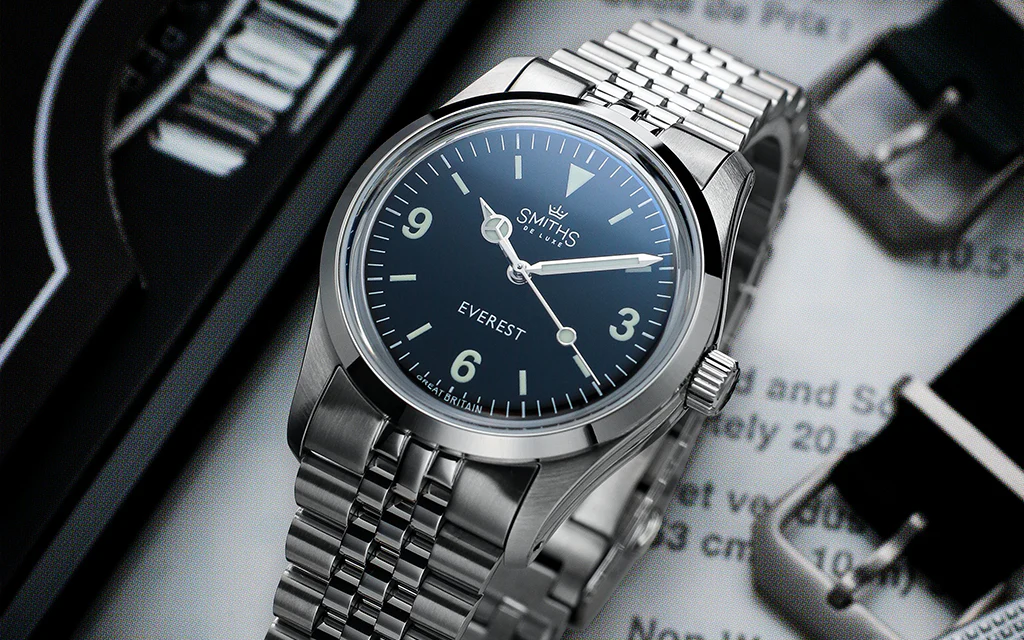
One of the most discussed chapters in Smiths wrist watch history relates to the Mount Everest expedition. In 1953, Sir Edmund Hillary and Tenzing Norgay successfully reached the summit of Mount Everest. The Smiths Everest model later gained recognition due to its association with that historic climb. While the exact watch details are often debated in collector circles, the Everest line became symbolic of resilience and exploration. This association strengthened Smiths’ reputation as a maker of robust field-ready wristwatches capable of surviving extreme environments.
British Watchmaking Identity
Smiths wrist watch production represented one of the rare examples of large-scale British watch manufacturing. At a time when Switzerland controlled much of global mechanical watch production, Smiths built watches in the UK using in-house movements. This gave the brand a national identity that resonates strongly with collectors today. The watches were not overly ornate. Instead, they reflected post-war British design philosophy: simple typography, modest case sizes, and high legibility. The restrained elegance of these watches appeals strongly to modern minimalism trends.
Major Smiths Wrist Watch Models
Smiths De Luxe
4
The De Luxe series became one of the most recognizable Smiths wrist watch families. Typically dress-oriented, these watches featured refined dials, applied markers, and hand-wound mechanical movements. Case sizes often ranged from 33mm to 36mm, which reflected mid-century standards. Jewel counts varied, commonly 15 to 19 jewels. The De Luxe line represents classic everyday elegance and remains accessible in the vintage market.
Smiths Astral
4
The Astral series typically offered slightly sportier styling while maintaining simplicity. Often featuring luminous markers and clean Arabic numerals, the Astral watches appealed to practical users seeking readability. These models were positioned as reliable daily wearers rather than luxury status pieces.
Smiths W10 Military Watch
4
The Smiths W10 is arguably the most collectible vintage Smiths wrist watch model. Issued to the British military in the late 1960s and early 1970s, the W10 featured fixed strap bars, a highly legible black dial, luminous markers, and a robust hand-wound movement. Military-issued examples carry specific case back markings indicating issue year and service numbers. Because of limited production and historical context, the W10 commands strong prices in today’s market.
Technical Specifications and Movement Analysis
Smiths wrist watches were predominantly manual-wind mechanical watches. The movements were designed for durability and ease of servicing. Typical specifications include:
• Hand-wound mechanical calibers
• Jewel counts between 15 and 19
• Power reserve approximately 36 to 40 hours
• Acrylic crystals
• Stainless steel or chrome-plated cases
The movements were not decorated elaborately, but they were built with practical longevity in mind. Servicing remains possible today, though parts availability can vary depending on model.
Design Philosophy and Aesthetic Traits
Smiths wrist watches are defined by understatement. Common aesthetic characteristics include:
• Thin baton or dauphine hands
• Minimal dial text
• Applied indices or painted numerals
• Subtle logo placement
• Conservative case proportions
This minimal design approach makes vintage Smiths watches versatile even in modern wardrobes.
Collectibility Factors
Several variables influence the collectibility of a Smiths wrist watch:
• Original dial condition
• Matching hands and crown
• Case preservation
• Movement originality
• Military provenance for W10 models
• Rarity of specific dial variations
Watches with untouched dials command premiums, especially those without moisture damage or heavy refinishing.
Market Value Trends
The vintage watch market has increasingly recognized British-made watches. Over the past decade, Smiths wrist watch prices have appreciated steadily, particularly for:
• Military W10 models
• Early Everest references
• High-jewel De Luxe examples in pristine condition
Entry-level De Luxe or Astral pieces remain relatively affordable, making Smiths attractive for new collectors entering vintage horology.
Authentication Guide
When evaluating a Smiths wrist watch:
• Examine dial printing quality
• Verify case back engravings
• Inspect movement engravings for authenticity
• Check for replacement hands inconsistent with era
• Confirm lume aging matches dial patina
Authenticity matters significantly in military-issued models.
Restoration Considerations
Restoration decisions impact value. Polishing cases reduces originality. Dial refinishing typically lowers collector desirability. Mechanical servicing is recommended for functionality but should preserve original parts where possible.
Comparison with Contemporary Brands
During the mid-20th century, Smiths competed indirectly with Swiss brands such as Rolex and Omega, though at different price tiers. Smiths positioned itself as a reliable British alternative rather than a luxury competitor. This distinction explains why Smiths watches emphasize functionality over prestige branding.
Modern Revival and Reinterpretations
4
In recent years, modern reinterpretations of classic Smiths models have emerged under the stewardship of enthusiasts connected with Timefactors. The modern Everest series pays homage to the vintage aesthetic while incorporating contemporary materials such as sapphire crystals and updated movements. These watches cater to enthusiasts who admire the vintage design but prefer modern reliability.
Why Smiths Wrist Watch Remains Relevant Today
Smiths wrist watches appeal because they combine authenticity, history, and affordability. In an era dominated by marketing-heavy brands, Smiths represents substance over image. Collectors value the brand’s British manufacturing heritage, military issuance history, and clean design language.
Buying Strategy for Collectors
To build a focused Smiths collection:
- Decide between dress, field, or military styles.
- Prioritize originality over cosmetic perfection.
- Budget for servicing costs.
- Research model-specific variations.
- Buy from reputable sellers with clear movement photos.
Patience often yields better examples at fair prices.
Investment Outlook
While not speculative luxury assets, Smiths wrist watches have shown steady appreciation. Military-issued W10 examples may continue gaining value due to finite supply. Entry-level models offer modest but stable growth potential, particularly in excellent condition.
Care and Maintenance
Owners should:
• Service every 3–5 years
• Avoid moisture exposure
• Store in dry environments
• Avoid aggressive polishing
• Use correct strap widths to preserve lugs
Proper care ensures long-term preservation.
The Emotional Appeal of Smiths Wrist Watch Ownership
Beyond specifications, Smiths watches carry a narrative of post-war British engineering resilience. Wearing one feels connected to mountaineering achievements, military service, and industrial precision heritage. That emotional narrative is a powerful driver of collector loyalty.
Conclusion
A Smiths wrist watch stands as a testament to British horological independence and practical engineering excellence. From the Everest model’s adventurous legacy to the W10’s military precision and the De Luxe’s timeless elegance, Smiths offers depth, history, and understated beauty. For collectors seeking authenticity rather than hype, and for enthusiasts wanting a tangible piece of mid-century British craftsmanship, Smiths remains a compelling and meaningful choice.
You may also like



Leave a Reply