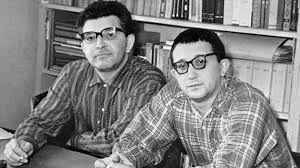
The Strugatsky Brothers: Visionaries Who Re-Invented Science
The names of Strugatsky Brothers and Boris Strugatsky stand at the summit of twentieth-century speculative literature. Working together for decades, the brothers created worlds that were at once adventurous, philosophical, tragic, ironic, and unsettlingly prophetic. Their stories crossed the boundaries between entertainment and intellectual inquiry, reshaping what science fiction could achieve under political restriction while still speaking to universal human concerns. Readers discovering them today often feel a strange shock of recognition: the dilemmas their characters face seem designed for the modern age of uncertainty, technological acceleration, and moral ambiguity.
Unlike many genre writers who focused primarily on gadgets or distant galaxies, the Strugatskys treated the future as a laboratory for examining the human soul. Their fiction asks what happens when progress outpaces wisdom, when knowledge collides with power, and when good intentions produce catastrophic outcomes. Through alien visitations, time travelers, mysterious zones, and flawed utopias, they turned speculative narrative into philosophical exploration.
Understanding their achievement requires more than listing novels. It means entering a creative universe built over decades, a mosaic of recurring ideas, subtle political commentary, and deep compassion for humanity.
Origins of Two Remarkable Minds
Arkady, the elder brother, was born in 1925, while Boris followed in 1933. Their childhood unfolded against the background of immense upheaval. War, evacuation, scarcity, and ideological pressure formed the emotional climate in which their imaginations matured. Arkady served in the military and worked as a translator; Boris trained in astronomy. These experiences provided not only technical knowledge but a lived awareness of bureaucracy, heroism, fear, and compromise.
From the start, their collaboration was unusually intimate. They debated every scene, every line, sometimes acting out dialogue aloud. Friends later recalled that the boundary between the two authors seemed to dissolve. The result was a unified narrative voice, at once analytical and humane, capable of sharp satire and lyrical melancholy within the same page.
The Birth of a New Soviet Science Fiction
When the brothers began publishing in the late 1950s, Soviet science fiction was dominated by optimistic tales of technological triumph. Space travel symbolized ideological superiority, and heroes rarely doubted the moral direction of progress. The Strugatskys initially worked within this framework but soon stretched it, complicating the future with ethical paradoxes.
Their early adventure novels attracted young readers, yet beneath the surface excitement questions were forming. Could advanced societies interfere with less developed civilizations without committing violence? Was enlightenment compatible with freedom? Who had the right to decide what counted as improvement?
These tensions would later become central to their mature works.
The Noon Universe and the Dream of Progress
One of their most famous creative achievements is the interlinked setting often called the Noon Universe. Here humanity has overcome poverty and many social conflicts. Exploration, education, and scientific curiosity drive civilization. On first glance it appears to be a confident utopia, but the writers gradually reveal cracks.
Observers from Earth travel to other planets attempting to guide development. The project seems noble, yet it repeatedly produces moral tragedy. Agents struggle with guilt, loneliness, and the awareness that they manipulate entire cultures.
Through this structure the Strugatskys were able to ask a dangerous question in an indirect way: can any authority claim moral purity when exercising power over others?
Evolution From Adventure to Philosophy
As the decades passed, the brothers moved steadily away from straightforward heroics. Their plots became more ambiguous, their endings less reassuring. Humor grew darker, irony sharper. Characters who once embodied progress began doubting their missions.
This evolution mirrored both personal maturity and the tightening political atmosphere around them. Instead of delivering explicit criticism, they embedded uncertainty within narrative form. Readers learned to read between the lines.
Roadside Picnic and the Shock of the Unknown
Among all their works, Roadside Picnic achieved extraordinary international recognition. The premise is deceptively simple: aliens visited Earth briefly and departed, leaving behind contaminated zones filled with inexplicable artifacts. Humans scavenge these areas illegally, risking death.
The brilliance of the novel lies in its refusal to explain the visitors. Humanity is not the chosen recipient of revelation; it may be as insignificant as animals investigating trash left after a picnic. Knowledge exists, but it is inaccessible, fragmented, dangerous.
The protagonist is neither scientist nor hero but a desperate man trying to survive. Through him the authors dismantle romantic myths of exploration and confront readers with cosmic indifference.
Moral Ambiguity as Narrative Engine
In many Strugatsky stories, characters act with admirable motives yet produce terrible outcomes. This structure prevents easy judgment. The reader must wrestle with competing values rather than accept official answers.
Such ambiguity gave their fiction enormous longevity. Political systems collapse, but ethical dilemmas remain.
Hard to Be a God and the Burden of Superiority
Another monumental work, Hard to Be a God, places an Earth observer in a medieval society sinking into brutality. He possesses advanced knowledge yet is forbidden to interfere directly. Watching cruelty while holding power to stop it becomes unbearable.
The novel exposes the psychological torment hidden inside imperial benevolence. Intervention may destroy cultural autonomy; non-intervention may permit horror. There is no pure choice.
The Role of the Intellectual Hero
Unlike muscular adventurers common in earlier science fiction, Strugatsky protagonists are often thinkers, scholars, or reluctant officials. Their battles occur within conscience as much as on battlefields. Doubt is not weakness but evidence of humanity.
This redefinition allowed readers who felt trapped in bureaucratic systems to recognize themselves.
Satire, Irony, and Hidden Critique
Because direct criticism of authority could be dangerous, the brothers mastered indirect expression. Absurd institutions, incompetent administrators, and surreal regulations appear throughout their fiction. Humor becomes camouflage for insight.
Attentive readers sensed parallels with everyday life, creating a shared secret between author and audience.
Language and Style
Their prose balances clarity with metaphor. Dialogue feels natural, sometimes playful, yet philosophical reflections can rise suddenly, opening abysses beneath routine events. They avoided excessive technical jargon, focusing instead on psychological texture.
Translation into other languages occasionally struggles to capture the rhythm, but the emotional force remains.
Reception at Home and Abroad
Within their homeland they became icons, admired by scientists, students, and dreamers. Abroad, translations gradually built a cult following. Western critics discovered a tradition of speculative writing shaped by constraints unfamiliar to them, yet dealing with issues strikingly relevant to global debates.
Adaptations and Expanding Influence
The haunting atmosphere of Stalker, directed by Andrei Tarkovsky, drew inspiration from Roadside Picnic and introduced wider audiences to the emotional territory of the brothers’ imagination. The film transformed the alien zone into a spiritual landscape, amplifying themes of faith, desire, and despair.
Later generations of writers, game designers, and filmmakers continued to borrow images and concepts, often without readers realizing their origin.
Why Modern Readers Return to Them
In an era defined by rapid innovation, environmental risk, and political uncertainty, the Strugatskys feel startlingly contemporary. They anticipated situations where humanity confronts forces it cannot fully comprehend, where expertise conflicts with morality, and where utopian promises decay into compromise.
Their refusal to simplify reality resonates deeply.
Structure Beneath the Chaos
Although many stories appear episodic, careful examination reveals intricate architecture. Recurring references, shared historical timelines, and thematic echoes bind separate works together. Dedicated fans map connections, discovering hidden continuities.
Humanism at the Core
Despite darkness, the brothers never abandoned faith in human potential. Compassion, curiosity, and solidarity persist even in catastrophic environments. Small gestures of kindness gain monumental significance.
The Creative Process
Accounts from friends describe endless discussions, revisions, and mutual challenges. Each brother sharpened the other’s thinking. Disagreement was productive, preventing complacency.
Censorship and Negotiation
Publication often required delicate negotiation. Manuscripts might wait years; edits were demanded; allegories had to remain ambiguous. Yet these pressures sometimes intensified creativity, forcing subtler expression.
Philosophical Foundations
Their fiction engages with debates about determinism, freedom, historical development, and ethical responsibility. Rather than presenting treatises, they dramatize conflicts, allowing readers to experience theory emotionally.
Science Without Worship
Technology in their books is rarely magical salvation. It is tool, temptation, burden. Moral growth must accompany innovation or disaster follows.
Tragedy of Good Intentions
Few writers depict so convincingly the sorrow of realizing that noble plans can harm those they aim to help. This tragic awareness runs like a river through their bibliography.
Building Atmosphere
Abandoned cities, silent laboratories, distant planets under strange skies—settings become psychological mirrors. Environment shapes fate.
Characters Who Stay With You
From weary stalkers to conflicted observers, their figures remain vivid long after plots fade. They are flawed, stubborn, capable of tenderness and cruelty.
Education Through Story
Many scientists in Eastern Europe later confessed that these novels inspired their careers. Fiction opened doors to intellectual adventure.
Beyond Ideology
Although born in a specific political context, their works escape narrow classification. They speak to universal human dilemmas.
The Later Years
As time passed, the brothers experimented further, sometimes producing fragmented, challenging narratives. Popularity fluctuated, yet respect endured.
After Arkady
Following Arkady’s death, Boris continued literary activity, reflecting on their shared legacy and engaging with fans who treated the books as moral compasses.
Global Rediscovery
New translations and digital communities have revived interest, bringing younger audiences into conversation with mid-century speculation.
Reading Them Today
Approaching the Strugatskys requires patience. They reward slow attention, inviting reflection rather than passive consumption.
Where to Begin
Many newcomers start with Roadside Picnic, then move toward Hard to Be a God, gradually exploring the broader universe.
Complexity Without Cynicism
Even at their bleakest, the brothers resist nihilism. Hope survives, fragile but real.
Lessons for Writers
They demonstrate how constraint can fuel innovation, how genre can host philosophy, and how empathy deepens speculative thought.
Enduring Mystery
Perhaps the greatest power of their fiction lies in what remains unsolved. Questions linger, echoing beyond final pages.
Conclusion: Architects of Thoughtful Futures
The Strugatsky brothers transformed science fiction into a field of moral investigation. Their legacy continues not because they predicted gadgets, but because they understood uncertainty, responsibility, and the cost of progress. Each generation that confronts its own unknowns will find guidance, warning, and companionship within their pages.
You may also like



Leave a Reply