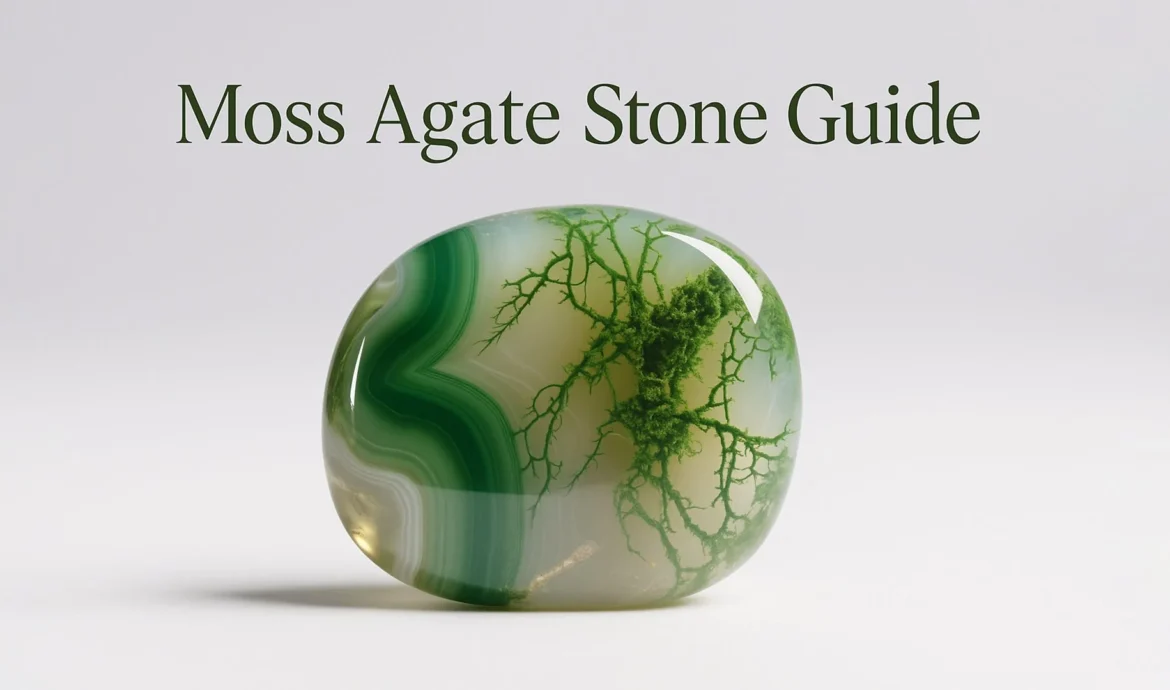
What Is Moss Agate? Meaning, Properties & Uses Explained
Moss agate is a fascinating gemstone known for its green, moss-like inclusions trapped within a translucent quartz base. It is widely admired in both jewelry and crystal healing communities for its natural patterns and earthy appearance. Many people searching for what is moss agate are drawn to its calming visuals and symbolic connection with nature.
This stone is not a true agate in the strict geological sense but a form of chalcedony with mineral inclusions such as manganese or iron. Its patterns resemble moss, trees, or underwater landscapes, making each piece visually distinct.
Exploring what is moss agate reveals its geological origin, physical characteristics, cultural significance, and practical uses in jewelry and decoration. The following sections break down its structure, formation, and value in detail.
Meaning and Origin of Moss Agate
Understanding what is moss agate begins with its name and origin. Despite being called an agate, it does not have the typical banding pattern found in traditional agates. Instead, it contains dendritic inclusions that create moss-like shapes.
Historically, the stone has been associated with agriculture and abundance. Farmers once believed it brought fertility to the land and ensured healthy crops. Its connection to nature made it a symbol of growth and renewal.
The origin of moss agate can be traced to volcanic activity. Silica-rich fluids filled cavities in rocks, and over time, mineral impurities formed unique green patterns. These patterns are what define what is moss agate in the gemstone world.
Different regions produce slightly different varieties, with India, Brazil, and the United States being notable sources. Each location influences color intensity and inclusion density.
The natural formation process gives moss agate a strong identity among collectors and gemstone enthusiasts.
Moss Agate Properties and Composition
To fully understand what is moss agate, its physical and chemical properties must be considered. Moss agate is primarily composed of silicon dioxide (SiO₂), the same mineral found in quartz.
Key properties include:
- Hardness of 6.5–7 on the Mohs scale
- Translucent to semi-transparent appearance
- Green, brown, or black dendritic inclusions
- Waxy to glass-like luster
The unique patterns inside the stone are not organic moss but mineral deposits. These inclusions form during slow crystallization within volcanic rock cavities.
The durability of moss agate makes it suitable for everyday wear in jewelry such as rings, pendants, and bracelets. Its stable structure ensures resistance to scratches and minor impacts.
When examining what is moss agate, its visual appeal is as important as its mineral composition. No two stones are identical, which increases its value among collectors.
The interplay of silica and trace minerals creates its signature landscape-like appearance, often resembling forests or underwater scenes.
Geological Formation and Natural Development
Another important aspect of what is moss agate is how it forms naturally over time. The stone originates in volcanic environments where silica-rich fluids seep into rock cavities.
Over thousands of years, slow cooling allows mineral impurities to crystallize. These impurities, often iron or manganese, form branching patterns known as dendrites.
The formation process involves:
- Volcanic rock cavities filling with silica gel
- Gradual crystallization over long periods
- Mineral infiltration creating green patterns
- Natural sealing within quartz layers
Unlike organic materials, moss agate is entirely mineral-based. The illusion of plant-like structures is purely geological.
The variation in pattern density depends on environmental conditions during formation. Slow cooling often results in more defined and intricate inclusions.
Studying what is moss agate from a geological perspective highlights its natural artistry and the complexity of Earth’s mineral systems.
Healing Properties and Metaphysical Beliefs
Many discussions about what is moss agate include its metaphysical associations. In crystal healing traditions, it is linked with emotional balance, grounding energy, and personal growth.
Common beliefs include:
- Promotes emotional stability
- Encourages connection with nature
- Supports mental clarity
- Enhances patience and calmness
It is often used during meditation practices due to its soothing appearance. Some believe it helps reduce stress and supports new beginnings in life.
Historically, the stone was associated with agriculture and prosperity. Farmers carried it as a charm to encourage healthy crops and favorable weather conditions.
While scientific evidence does not support healing claims, cultural and symbolic meanings remain strong. The popularity of what is moss agate continues to grow in wellness communities due to its aesthetic and symbolic value.
Its calming green patterns are often linked to renewal and natural harmony.
Moss Agate Uses in Jewelry and Design
Jewelry designers frequently highlight what is moss agate due to its unique visual appeal. Each stone has distinct patterns, making it ideal for personalized jewelry pieces.
Common uses include:
- Engagement rings
- Pendants and necklaces
- Bracelets and earrings
- Decorative carvings
Its earthy tones pair well with both silver and gold settings. Designers often cut the stone into cabochons to preserve its natural patterns.
Beyond jewelry, moss agate is used in home décor items such as polished spheres, paperweights, and ornamental sculptures.
Collectors value it not only for beauty but also for uniqueness. No two pieces look identical, which enhances its artistic appeal.
Understanding what is moss agate in design contexts highlights its versatility and timeless charm in fashion and décor industries.
How to Identify Genuine Moss Agate
Identifying real moss agate is essential when evaluating what is moss agate in the market. Due to its popularity, synthetic versions and dyed stones are sometimes sold as natural specimens.
Key identification tips include:
- Natural inclusions appear irregular and branch-like
- Color distribution is uneven and organic
- Transparency varies across the stone
- No perfect symmetry in patterns
Fake versions often show overly uniform or artificially enhanced colors. Real moss agate has depth and layered inclusions that appear embedded within the stone.
A simple scratch test can also help, as genuine moss agate has moderate hardness due to its quartz composition.
Lighting can reveal internal structures more clearly. Natural stones often display subtle depth when held against light.
Learning what is moss agate in terms of authenticity helps buyers make informed decisions and avoid imitations.
Moss Agate Price and Buying Guide
Pricing for moss agate varies based on quality, clarity, and pattern uniqueness. When exploring what is moss agate, value factors play an important role in understanding market trends.
Price determinants include:
- Clarity and transparency
- Complexity of inclusions
- Size and cut quality
- Craftsmanship in jewelry settings
Raw specimens are generally more affordable than polished gemstones set in jewelry. High-quality pieces with vivid green patterns tend to command higher prices.
Collectors often prefer stones with balanced inclusions that resemble natural landscapes. These pieces are considered more visually appealing and rare.
When purchasing, it is advisable to buy from reputable gemstone dealers or certified jewelry stores to ensure authenticity.
The growing demand for natural gemstones has increased awareness around what is moss agate, making it a popular choice in both fashion and crystal markets.
Conclusion
Understanding what is moss agate involves examining its geological origin, physical structure, symbolic meaning, and modern applications. This gemstone stands out due to its natural green patterns and unique formation process.
The appeal of what is moss agate extends beyond appearance, reaching into cultural beliefs, jewelry design, and collector interest. Its natural artistry makes each piece one-of-a-kind, contributing to its long-standing popularity.
From geological formation to decorative use, what is moss agate remains a topic of interest for gemstone enthusiasts and designers alike. Its blend of beauty and uniqueness ensures continued demand across global markets.
Exploring and appreciating this stone opens opportunities for better jewelry choices, deeper geological understanding, and meaningful personal connection with natural minerals.
FAQs
1. What is moss agate made of?
It is primarily made of silicon dioxide with mineral inclusions such as iron or manganese.
2. Is moss agate a real agate?
Despite its name, it is a form of chalcedony rather than a true banded agate.
3. What is moss agate used for?
It is used in jewelry, decoration, and spiritual practices focused on grounding and balance.
4. How can moss agate be identified?
It is identified by its moss-like inclusions, irregular patterns, and translucent quartz base.
5. Is moss agate expensive?
Prices vary, but most moss agate is affordable unless it has rare patterns or high-quality craftsmanship.
You may also like


Leave a Reply