Ounces in a Cup: Complete Conversion Guide
Understanding ounces in a cup is essential for accurate cooking, baking, and recipe conversions. Whether you’re preparing a family dinner or following a detailed baking recipe, knowing the correct measurement can save time and improve results.
Many people assume all ounces are the same. However, there is a significant difference between fluid ounces and weight ounces. This distinction often causes confusion, especially when converting ingredients.
How many ounces are in a cup, the difference between liquid and dry measurements, common conversion charts, and practical tips for measuring ingredients correctly. By the end, you’ll be able to convert measurements confidently and avoid common kitchen mistakes.
How Many Ounces in a Cup?
The quick answer is simple:
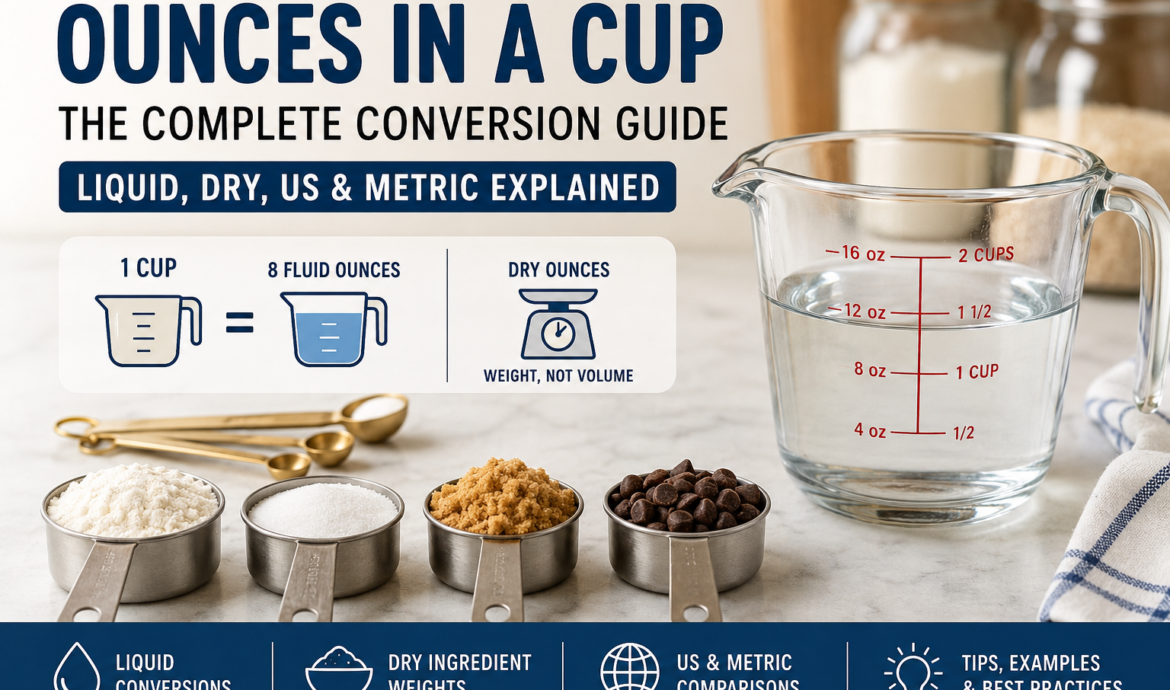
1 US cup = 8 fluid ounces
This measurement is part of the United States customary measurement system and is widely used in cooking and baking recipes.
Here are some common conversions:
| Cups | Fluid Ounces |
|---|---|
| 1/4 Cup | 2 oz |
| 1/3 Cup | 2.67 oz |
| 1/2 Cup | 4 oz |
| 3/4 Cup | 6 oz |
| 1 Cup | 8 oz |
| 2 Cups | 16 oz |
| 4 Cups | 32 oz |
When discussing ounces in a cup, most recipes refer to fluid ounces rather than weight ounces.
This distinction becomes important when measuring ingredients such as flour, sugar, milk, or butter.
Fluid Ounces vs Weight Ounces
One of the biggest measurement mistakes comes from confusing fluid ounces with weight ounces.
What Are Fluid Ounces?
Fluid ounces measure volume. They tell you how much space a liquid occupies.
Examples include:
- Water
- Milk
- Juice
- Oil
- Broth
For liquids:
1 cup = 8 fluid ounces
What Are Weight Ounces?
Weight ounces measure mass rather than volume.
Examples include:
- Flour
- Sugar
- Cocoa powder
- Chocolate chips
- Nuts
The weight of one cup depends on the ingredient’s density.
For example:
| Ingredient | Weight per Cup |
| Water | 8 oz |
| Flour | About 4.4 oz |
| Sugar | About 7.1 oz |
| Butter | About 8 oz |
Therefore, understanding ounces in a cup requires knowing whether a recipe refers to volume or weight.
Ounces in a Cup for Common Ingredients
Different ingredients produce different ounce measurements because density varies.
Flour
A cup of all-purpose flour weighs approximately:
4.4 ounces
Packing flour tightly into a measuring cup can increase weight significantly.
Granulated Sugar
One cup of sugar weighs roughly:
7.1 ounces
Sugar is denser than flour, which explains the difference.
Butter
Butter is unique because:
1 cup butter = 8 ounces
This makes conversions easier for many baking recipes.
Water
Water is often used as a reference measurement.
1 cup water = 8 fluid ounces and approximately 8 ounces by weight
This rare one-to-one relationship causes some people to assume all ingredients behave similarly, which is not correct.
Knowing these examples helps you better understand ounces in a cup when preparing recipes.
US Cups vs UK Cups
Measurement systems vary between countries.
United States Measurements
In the United States:
- 1 cup = 8 fluid ounces
- 1 cup = 236.6 milliliters
Most online recipes follow this standard.
United Kingdom Measurements
Traditional UK measurements differ.
- 1 cup = 10 Imperial fluid ounces
- 1 cup ≈ 284 milliliters
As a result, recipes from different countries may produce different outcomes if conversions are not adjusted.
Why This Matters
If you’re baking cakes, cookies, or pastries, even small measurement differences can affect:
- Texture
- Moisture
- Rise
- Flavor balance
Always check the origin of a recipe before converting measurements.
Easy Ounces to Cups Conversion Chart
The following chart simplifies quick kitchen conversions.
| Fluid Ounces | Cups |
| 1 oz | 1/8 cup |
| 2 oz | 1/4 cup |
| 4 oz | 1/2 cup |
| 6 oz | 3/4 cup |
| 8 oz | 1 cup |
| 12 oz | 1.5 cups |
| 16 oz | 2 cups |
| 24 oz | 3 cups |
| 32 oz | 4 cups |
Many cooks keep a chart like this near their kitchen workspace.
Using a conversion chart eliminates guesswork and improves measurement accuracy.
How to Measure Ingredients Correctly
Accurate measuring techniques are just as important as understanding conversions.
Measuring Liquids
For liquids:
- Use a clear liquid measuring cup.
- Place it on a flat surface.
- Pour slowly.
- Read the measurement at eye level.
This method ensures precision.
Measuring Dry Ingredients
For dry ingredients:
- Use dry measuring cups.
- Spoon ingredients into the cup.
- Avoid packing unless instructed.
- Level with a straight edge.
This approach provides more consistent results.
Use a Kitchen Scale
Many professional bakers prefer weighing ingredients.
Benefits include:
- Greater accuracy
- Consistent results
- Easier recipe scaling
- Fewer measuring errors
A digital kitchen scale is especially useful when converting ounces in a cup for baking.
Why Accurate Measurements Matter in Baking
Cooking often allows flexibility. Baking does not.
Baking relies on precise ingredient ratios.
Even small measurement errors can lead to:
- Dense cakes
- Dry cookies
- Flat muffins
- Tough bread
For example, adding too much flour because of improper cup measurement can dramatically change texture.
Therefore, professional bakers frequently rely on weight measurements instead of volume measurements.
However, understanding ounces in a cup remains important because many recipes still use cups as their primary unit.
Combining proper measuring techniques with accurate conversions helps produce reliable results every time.
Common Measurement Mistakes to Avoid
Many kitchen errors result from simple misunderstandings.
Confusing Fluid and Weight Ounces
This is the most common mistake.
Always determine whether the recipe refers to:
- Volume
- Weight
Using the Wrong Measuring Cup
Liquid measuring cups and dry measuring cups serve different purposes.
Using the wrong tool can affect accuracy.
Ignoring Ingredient Density
A cup of flour does not weigh the same as a cup of sugar.
Always consider the ingredient being measured.
Not Leveling Dry Ingredients
Uneven measurements create inconsistent results.
Level ingredients whenever possible.
Avoiding these mistakes will improve cooking accuracy and confidence.
Quick Kitchen Conversion Reference
Here are several useful conversions:
- 1 tablespoon = 0.5 fluid ounces
- 2 tablespoons = 1 fluid ounce
- 8 fluid ounces = 1 cup
- 16 fluid ounces = 2 cups
- 32 fluid ounces = 4 cups
- 64 fluid ounces = 8 cups
- 128 fluid ounces = 1 gallon
Keeping these conversions handy can simplify meal preparation.
FAQs About Ounces in a Cup
1. How many ounces in a cup of water?
One US cup of water equals 8 fluid ounces and approximately 8 ounces by weight.
2. Is 8 ounces always equal to 1 cup?
Only when referring to fluid ounces in the US measurement system. Weight ounces vary depending on the ingredient.
3. How many ounces in a half cup?
A half cup equals 4 fluid ounces.
4. How many ounces in two cups?
Two cups equal 16 fluid ounces.
5. Why does flour weigh less than 8 ounces per cup?
Flour is less dense than water. A cup measures volume, not weight, so different ingredients have different weights.
Conclusion
Understanding ounces in a cup is a valuable skill for anyone who cooks or bakes regularly. While the standard US conversion is simple—1 cup equals 8 fluid ounces—the topic becomes more complex when weight measurements and ingredient density enter the equation.
Knowing the difference between fluid ounces and weight ounces helps prevent mistakes and improves recipe accuracy. In addition, understanding international measurement differences can save you from frustrating baking results.
Whether you’re measuring water, flour, sugar, or butter, using the correct tools and conversion methods will help you achieve consistent outcomes. Keep a conversion chart nearby, use a kitchen scale when possible, and always verify whether a recipe refers to volume or weight.
The next time you need to convert ounces in a cup, you’ll have the knowledge and confidence to do it accurately.
You may also like



Leave a Reply